Wheel of Fame - Guess words
- 4.5
- Rating
- 10.00M
- Installs
- Free
- Price
 Analysis by App-foxy
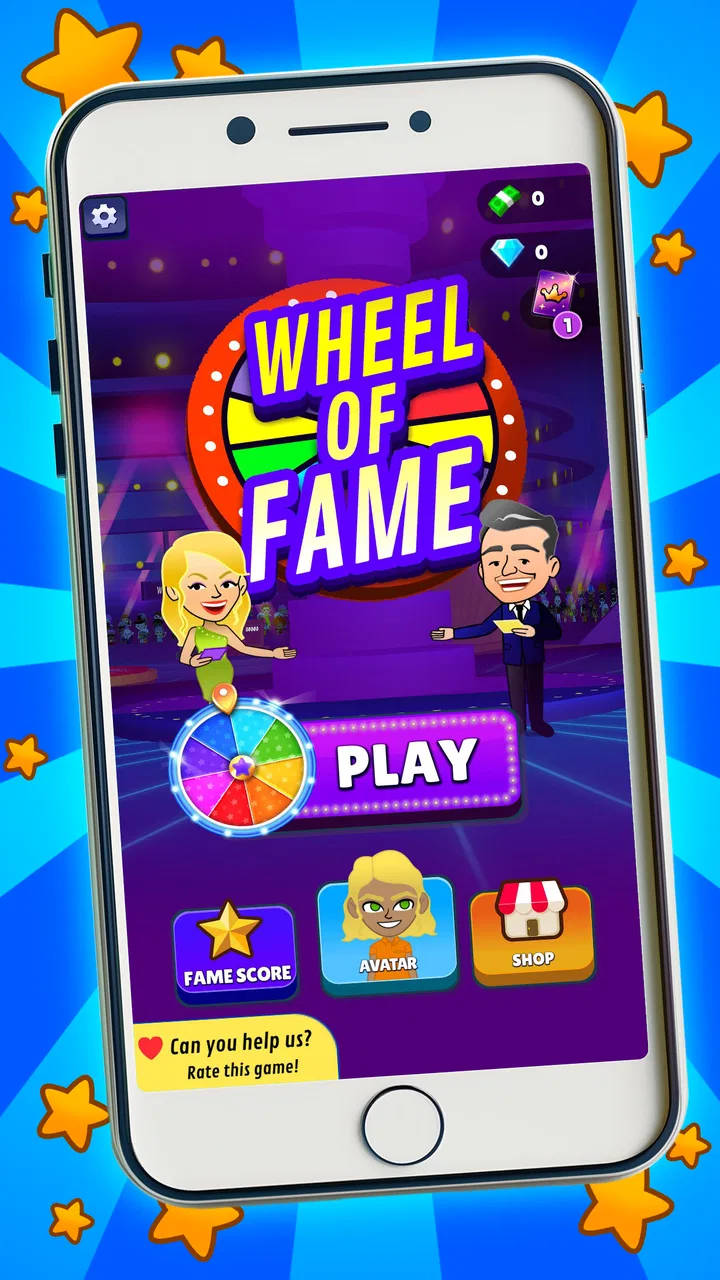
I approached Wheel of Fame - Guess words as a quick trivia game rather than a long-form word puzzle. Its central idea is easy to understand: solve hidden words arranged around a wheel, then build a fame score as you continue. That makes it approachable immediately, especially when I want something light that I can play without learning a complicated rule set.
What makes it worth discussing is not just whether the basic guessing feels enjoyable. The more important questions are how the game handles progress, whether the fame score adds meaningful motivation, and how comfortable it feels to play without spending money. Senior Games has positioned this as a free game for Everyone, and its broad audience is reflected in its average rating of 4.5 from around 220 thousand ratings. In my experience, it works best when I treat it as a short mental break rather than a serious competitive challenge.
How the word wheel feels in everyday play
I find the wheel format best suited to little pockets of time: it gives a word puzzle a clear visual focus without asking me to settle in for a long session. In this section, I’ll look at how that quick-start feel holds up when I play more than a round or two, including the small habit of pausing to consider a guess rather than tapping the first answer that comes to mind.
You May Also Like

 AccuWeather: Weather Radar
AccuWeather Review: A Quick, Clear Forecast for Everyday Decisions
For everyday plans, the best forecast is the one you can understand quickly. AccuWeather makes rain timing, radar, and local conditions easy to act on, with a few trade-offs.

 Hill Climb Racing
Why Hill Climb Racing Still Turns Crashes Into One More Run
A tiny car, a bumpy hill and one more upgrade: Hill Climb Racing keeps resurfacing because its simple chaos makes every near-miss feel personal.

 AliExpress - Shopping App
AliExpress Makes Global Shopping Feel Personal, but Shoppers Bear the Risk
AliExpress turns a global marketplace into a pocket-sized discovery engine. Its reach is useful, its shopping loop compelling, and its trade-offs easy to miss.

 Lords Mobile: Kingdom Wars
Lords Mobile Is a Kingdom-Building Routine, Not a Quick Match
A case-by-case verdict on the building, battles, device demands, and social commitments that make Lords Mobile rewarding for some players and exhausting for others.

 PDF Scanner app - TapScanner
TapScanner Makes Paperwork Easier to Capture, Check, and Share
TapScanner makes scanning with a phone feel less like a rescue operation and more like a dependable step in getting work done. Its capture tools are useful, though not flawless.

 Block Blast!
 Shows How Much a Puzzle Game Can Leave Out
A quiet grid game shows why puzzle players increasingly value instant clarity, repeatable skill and low-pressure play—and where the genre still needs to catch up.
More From Our News Desk
View All News


A simple format that gets moving quickly
The appeal of the wheel is that it gives a familiar guessing task a more visual shape. Instead of staring at a plain list of clues, I am working toward words presented through a circular game layout. That small change matters: the wheel makes each puzzle feel like a compact round, and the act of revealing a word gives the session a clear rhythm.
I can imagine using it while waiting for an appointment, taking a short break from work, or winding down before bed. It does not demand the same uninterrupted attention as a larger adventure game. I can play a little, stop, and return later without feeling that I have abandoned a complicated storyline. For players who enjoy word games but prefer a more playful presentation than a traditional crossword, this format is a sensible fit.
The game is also easy to recommend to someone who wants casual trivia without a steep learning curve. The store description focuses on finding hidden words and increasing a fame score, and that accurately captures the basic loop without making it sound more elaborate than it is. I would not choose it for deep narrative, complex strategy, or a large social experience. I would choose it when the satisfaction of recognizing a word and completing a small challenge is enough.
What the fame score adds
The fame score gives the guessing rounds a reason to continue beyond solving one isolated word. Each successful answer feels connected to a broader sense of progress, which can be useful for players who like seeing their effort accumulate. It turns a collection of small puzzles into a personal climb, even if the underlying activity remains simple.
At the same time, I would keep expectations realistic. A score is motivating only when I care about improving it. If I am looking for varied game mechanics, a story, or meaningful strategic choices, the fame system alone will not provide that depth. Its role is closer to a lightweight progress marker: it encourages another round, but it does not transform the game into a highly competitive trivia platform.
One practical way to enjoy it is to set a personal stopping point before starting. For example, I might play until I solve a handful of words or until I reach a comfortable break in my day. That prevents the score from turning a relaxing activity into an endless chase. The game feels healthiest when progress is a pleasant bonus rather than a requirement to keep playing.
Where the challenge can become uneven
Word games naturally depend on vocabulary, familiarity, and the way a clue is interpreted. A word that feels obvious to one player may be unexpectedly difficult for another. That is not necessarily a flaw, but it means the experience can vary considerably from person to person. I would not judge my ability by a single difficult round, especially if the answer uses a term I do not encounter often.
The wheel presentation may also create a different kind of pressure from a conventional word grid. A circular layout can feel lively and memorable, but it may be less immediately readable for someone who prefers a very plain puzzle interface. Players with limited patience for visual game elements may find that the presentation adds atmosphere without adding much strategic value.
My best tip is to pause before making a guess when several possibilities seem plausible. The temptation in a quick trivia game is to tap the first answer that comes to mind. Taking a moment to examine the available letters or the wording can reduce careless mistakes and make the solution feel earned. This is a small adjustment, but it changes the game from random tapping into deliberate word recognition.
Free access and the spending question
The game is free to download and play, which makes trying it low-risk. There are in-app purchases ranging from $0.99 to $15.99 per item. That is the key purchase context I would want to know before installing: the entry price is zero, but optional spending exists inside the experience.
I am comfortable recommending it to someone who wants to test the basic loop without committing money. The sensible approach is to play first and decide later whether any purchase genuinely improves the experience for you. I would not spend simply because a score feels unfinished or because a difficult word creates pressure. A trivia game should remain enjoyable when I choose not to buy anything.
For families, the Everyone content rating makes it easier to consider as a broadly suitable casual game. Still, the presence of optional purchases means I would review device purchase controls before handing it to a child. That is not a criticism of the word gameplay itself; it is a practical habit for any free game with paid items.
I also appreciate that the purchase range gives a clearer boundary than vague wording such as “offers in-app purchases.” The low end allows a small experiment, while the higher end is substantial enough that I would treat it as a deliberate decision rather than an impulse. Since the game is playable for free, my personal rule would be to avoid spending until I know exactly what problem the purchase solves for my own play style.
Does spending affect competitive fairness?
This is where I would be careful not to overstate what the game offers. Wheel of Fame is built around personal word-solving and a fame score, but I would not treat that score as proof of a formal competitive ranking system. A higher score may show that someone has played more or solved more words, yet that is different from demonstrating superior skill under identical conditions.
For me, the game feels fairest when I view the score as a personal progress measure. I can compare my current effort with my own earlier effort, but I would avoid assuming that another player’s score represents a directly comparable contest. Time spent, familiarity with the vocabulary, and access to any optional assistance could all affect how progress feels, even without knowing the details of every game system.
This distinction matters if you are searching for a serious head-to-head trivia experience. A dedicated competitive quiz game may be better if you want timed matches, visible opponents, fixed rules, and clearly defined rankings. Wheel of Fame is more comfortable as a solo word challenge with a fame-themed layer than as an esports-style test of knowledge.
My advice is to decide what “winning” means before playing. If winning means solving more words for your own satisfaction, the score can be encouraging. If it means proving that you are better than other people under controlled conditions, this is probably not the right tool. That is not a weakness for its intended casual audience, but it is an important difference from competitive trivia alternatives.
How it compares with ordinary word puzzles
Compared with a crossword, this game feels more immediate and less dependent on maintaining a large grid in your head. I can focus on the current hidden word and the next small objective. That makes it friendlier for short sessions, although players who love crosswords for their layered clues and long-form deduction may find it comparatively light.
Compared with a standard quiz app, the word-wheel structure gives the experience a stronger visual identity. I am not simply moving through question cards; I am solving within a recognizable circular format and watching the fame idea frame my progress. The trade-off is that it may offer less variety than a quiz covering many question types, subjects, and timed modes.
Compared with a word search, the emphasis feels more connected to guessing and recognition than to scanning a dense letter field. That can be less tiring for a quick break, but it may disappoint players who specifically enjoy hunting through a busy board. The best alternative depends on whether you want a compact guessing loop, a broad knowledge test, or a more involved puzzle structure.
Who should install it
I would recommend it to casual players who enjoy vocabulary challenges, people who like short trivia sessions, and anyone who wants a simple game that can be understood quickly. It is especially suitable for someone who enjoys a visible sense of progress but does not need a story or a complex upgrade system to stay interested.
It can also work for older players who prefer straightforward controls and familiar word-based entertainment. Senior Games is the developer, and the game’s Everyone rating supports its broad accessibility. I would still encourage each player to judge the visual layout and reading comfort personally, because a simple rule set does not guarantee that every presentation style suits every user.
I would skip it if my main goal were multiplayer competition, detailed educational explanations, or a large variety of trivia subjects. I would also skip it if I dislike score-driven loops or feel uncomfortable with optional purchases in free games. In those cases, a paid word puzzle with a clearly defined one-time cost, or a dedicated quiz app with explicit competitive rules, may be a better match.
Version, availability, and practical expectations
The game was released on January 14, 2020, and the current version is 2.4.8. It requires at least Android 7.1, so users on older devices should check compatibility before planning around it. Its reach is considerable, with over ten million installs, which suggests that the format has found a substantial casual audience.
Those figures do not tell me whether I personally will enjoy every session, but they do make the game feel established rather than obscure. I would still judge it on the actual loop: do the hidden-word rounds stay satisfying, does the fame score encourage rather than pressure me, and can I enjoy it without paying? Those are more useful questions than popularity alone.
If I were introducing it to a friend, I would explain the experience plainly: install it for free, try several rounds, and see whether the wheel format makes word guessing more enjoyable than a normal puzzle grid. I would not promise endless variety or serious competition. I would describe it as a compact trivia game whose strongest quality is its easy-to-start structure.
What I would want to know before committing
A likely concern is whether it can be enjoyed without spending. The answer from my experience is that the free entry makes it reasonable to test first, and the existence of purchases does not by itself mean payment is required for the basic appeal. I would keep purchase controls in place and decide based on enjoyment, not on pressure from a score.
Another question is whether it suits a short daily routine. Yes, that is one of its better use cases. A few rounds can fit into a waiting period or a quiet pause, and the fame score gives the session a natural sense of continuation. I would avoid treating it like a game that needs a long uninterrupted block of time.
Players may also wonder whether it is suitable for children. The Everyone rating makes it broadly appropriate from a content perspective, but adults should still remember that optional purchases are present. For shared devices, simple purchase protections are a sensible precaution.
If you are looking for a way to improve general knowledge across history, science, geography, and current events, I would choose a broader quiz app instead. This game’s identity is tied to hidden-word solving, so its value comes from the puzzle format and the fame progression rather than from acting as a complete knowledge course.
Finally, if you want a fair contest against friends, I would clarify that expectation before installing. The fame score can make personal progress feel rewarding, but I would not assume it provides the same structure as a dedicated multiplayer trivia game. For friendly solo play, that is fine; for measured competition, another category of app is likely stronger.
My trust verdict after weighing the trade-offs
My overall view is positive but deliberately modest. Wheel of Fame - Guess words succeeds because it does not make the basic task difficult to understand: I solve hidden words, build a fame score, and decide whether I want to continue. That clarity is valuable when I want a casual game rather than another demanding project.
The main trade-off is that the score and wheel presentation may not be enough for players who need deep variety or head-to-head competition. Optional purchases also mean I would approach the game with a clear spending boundary. Since the game is free, I see no reason to pay before confirming that the word rounds hold my attention.
Senior Games has created a trivia experience that is easy to sample and well suited to brief, repeatable sessions. I would recommend it to a friend who enjoys word guessing and wants a light fame-themed progression system. I would not recommend it as a replacement for a serious quiz platform or a rich crossword collection.
My final recommendation is to try it as a free, low-commitment word game, while treating the fame score as personal motivation rather than proof of competitive status. If that balance sounds appealing, the wheel format can make an ordinary break more engaging. If you need transparent competition, extensive subject coverage, or a purchase-free experience with no optional spending at all, choosing a different kind of trivia game will likely leave you happier.
FAQs for Wheel of Fame - Guess words
01What is the main objective of Wheel of Fame - Guess Words?
Wheel of Fame - Guess Words is a word puzzle game where players spin a virtual wheel to earn points and guess hidden words or phrases. The main objective is to solve the puzzles by guessing correct letters and words, similar to popular TV game shows. Players can challenge their vocabulary and enjoy competitive gameplay.
02Is Wheel of Fame - Guess Words free to play?
Yes, Wheel of Fame - Guess Words is free to download and play. However, it may offer in-app purchases for additional features, hints, or to remove ads. These purchases are optional and enhance the gaming experience, but players can fully enjoy the game without spending any money.
03What are the system requirements for Wheel of Fame - Guess Words?
To run Wheel of Fame - Guess Words smoothly, you need a device with Android 5.0 or higher, or iOS 10.0 or later. Make sure your device has sufficient storage space, as the game may require periodic updates. A stable internet connection is also recommended for accessing online features and updates.
04Can I play Wheel of Fame - Guess Words offline?
Wheel of Fame - Guess Words can be played offline for most of its features, allowing you to enjoy the game without an internet connection. However, accessing certain features like leaderboard updates, special events, or multiplayer modes may require you to be online. It’s best to connect periodically for the latest content.
05How can I improve my skills in Wheel of Fame - Guess Words?
To improve your skills, practice regularly and familiarize yourself with common word patterns and phrases. Utilize hints wisely to learn new strategies and play with friends to exchange tips. Participating in daily challenges can also sharpen your skills and help you become more adept at solving puzzles quickly.
Pros
- Engaging word puzzles enhance vocabulary.
- Colorful graphics create an immersive experience.
- Multiplayer mode adds competitive fun.
- Regular updates keep content fresh.
- Easy to navigate interface for all ages.
Cons
- In-app ads can be disruptive.
- Limited free hints available.
- Requires stable internet connection.
- Some puzzles may feel repetitive.
- In-app purchases can become costly.

Wheel of Fame - Guess words
Gallery